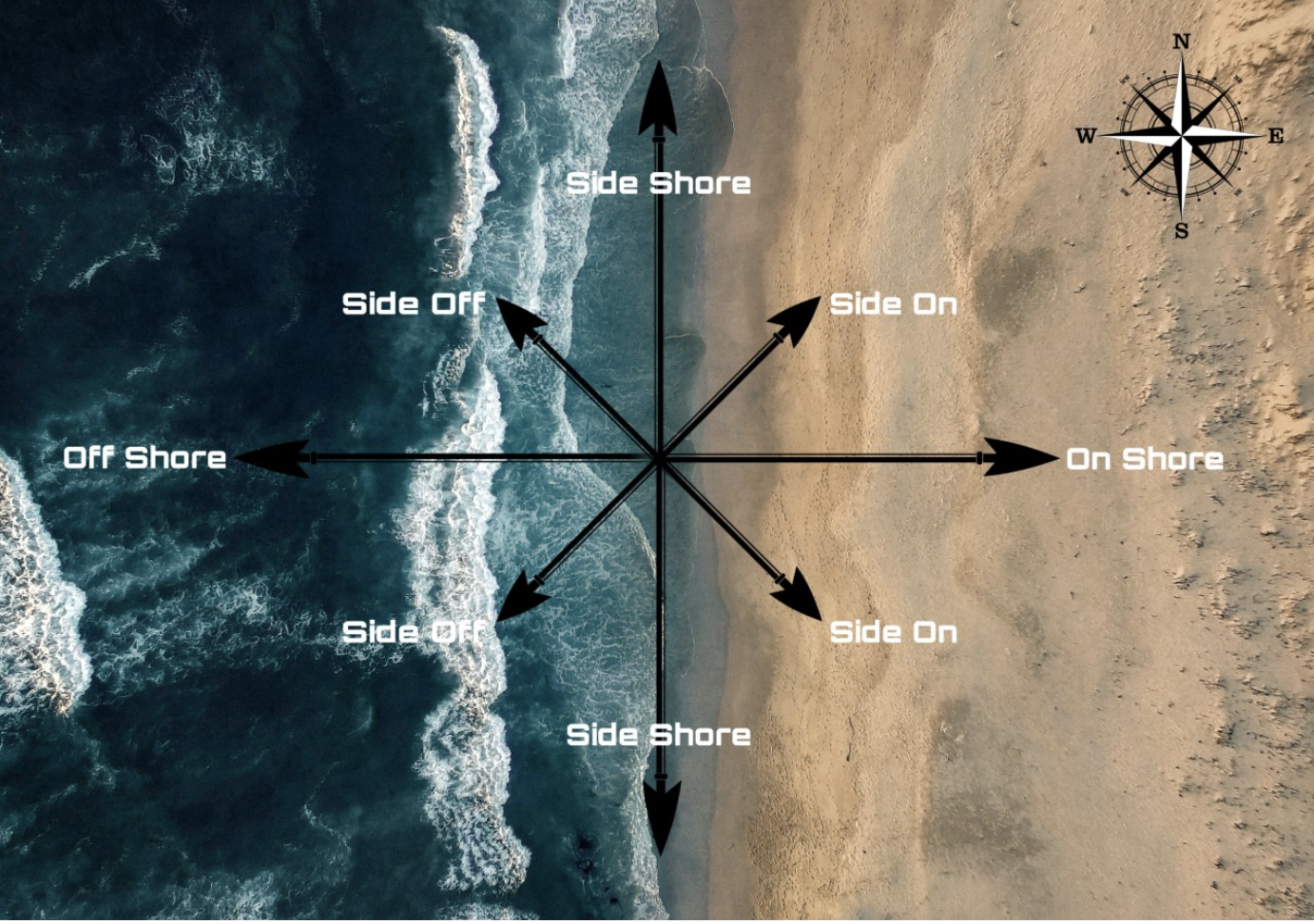
Elements of a wave chart
Wave charts (or wave forecasts) typically contain several columns and rows. Key information includes:
has. Wave height (in meters or feet)
- Definition : The height of the swell represents the vertical distance between the trough and the crest of the wave.
- Interpretation The higher the swell, the bigger the waves will be. Swell size is one of the key factors in determining if the conditions are suitable for your skill level. In general:
- Small swells (0.5 to 1 m) : Ideal for beginners.
- Moderate swell (1 to 2 m) : Suitable for intermediate surfers.
- Larger swell (2.5 m and over) Reserved for experienced surfers.
b. Swell period (in seconds)
- Definition : The period is the time between two successive waves (the number of seconds between the passage of two crests).
- Interpretation The period gives an idea of the power and quality of the swell. A swell with a longer period (more than 12-15 seconds) is generally cleaner and more powerful, generating better waves. Conversely, a shorter period (less than 10 seconds) often produces less formed and choppier waves (with erratic movement).
- Short periods (8-10 seconds) Often more disordered waves, suitable for more sheltered spots.
- Long periods (12-15 seconds and more) Smoother and more powerful waves, suitable for exposed spots and experienced surfers.
c. Swell direction (in degrees or cardinal points)
- Definition : The direction indicates where the swell is coming from (the wind that generated the swell).
- Interpretation It's important to know the swell direction relative to the beach or surf spot where you're surfing. Depending on the coastline, some waves form better when the swell comes from a specific direction.
- Wave direction For example, a swell coming from the west (W) or northwest (NW) may be more suitable for certain surf spots.
d. Wind (strength and direction)
- Definition Wind influences the quality of the swell and the formation of waves.
- Interpretation :
- Onshore wind (towards the beach) This can make the waves more chaotic and difficult to surf.
- Offshore wind (from the beach) This helps keep the waves cleaner and better formed.
- Side-shore wind : Wind blowing parallel to the beach, which can make conditions a little more complex but generally surfable.
2. Example of a typical surf report table
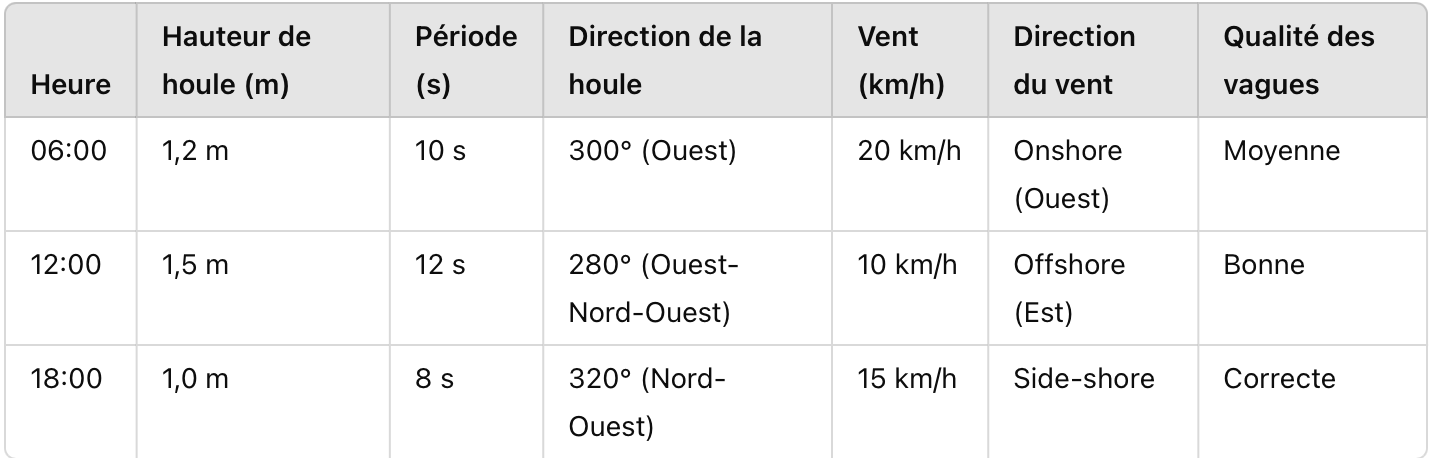
Here's what a swell forecast chart might look like:
3. How should we interpret the painting?
- 06:00 The swell is 1.2 meters with a 10-second period, coming from the west (300°). The wind is blowing in the opposite direction (onshore), making the wave quality average. Not ideal for a perfect session, but there might be some surfable waves if you choose your spot well.
- 12:00 The swell is increasing to 1.5 meters with a 12-second period, meaning more powerful and better-formed waves. The swell direction is west-northwest (280°) and the wind is blowing offshore, which improves wave quality. This is probably the best time to surf if you want good quality waves.
- 18:00 The swell has decreased to 1 m with a period of 8 seconds. The waves will likely be less powerful and more disorganized, but there are still surfable waves, and the side-shore wind may make conditions a little more challenging.
4. Additional tips
- If you're a beginner : Looking for waves with a moderate height (less than 1.5 m), a period of 10 to 12 seconds, and a light wind, preferably offshore.
- If you are more experienced : You can afford waves with a higher swell (2m or more), a long period (15 seconds or more) and accept a side-shore or slightly onshore wind, especially if the spot is suitable.
- Depending on your spot Each beach reacts differently to the direction and period of the swell. Some spots work better with a swell coming from the north, others from the south. Consult the forecast specific to your spot for more accurate results.
In summary, to fully understand a surf report, You need to master the interpretation of swell height, period, direction, and wind conditions. This will allow you to choose the best time and place to surf based on the day's conditions.